

A Practical Guide to Recognizing and Reducing Daily Stress
For autistic adults balancing daily life, stress often isn’t "random"; it’s tied to specific stress triggers that pile up until everything feels too loud, too fast, or too much. Sensory overload can hit without warning, changes in routine can throw off the whole day, and social pressure stressors can make even small interactions feel high-stakes. Add work and school demands, and it’s easy to end up stuck between needing support and not knowing what’s actually setting the stress off. Naming the most common triggers makes stress feel more predictable and easier to respond to.
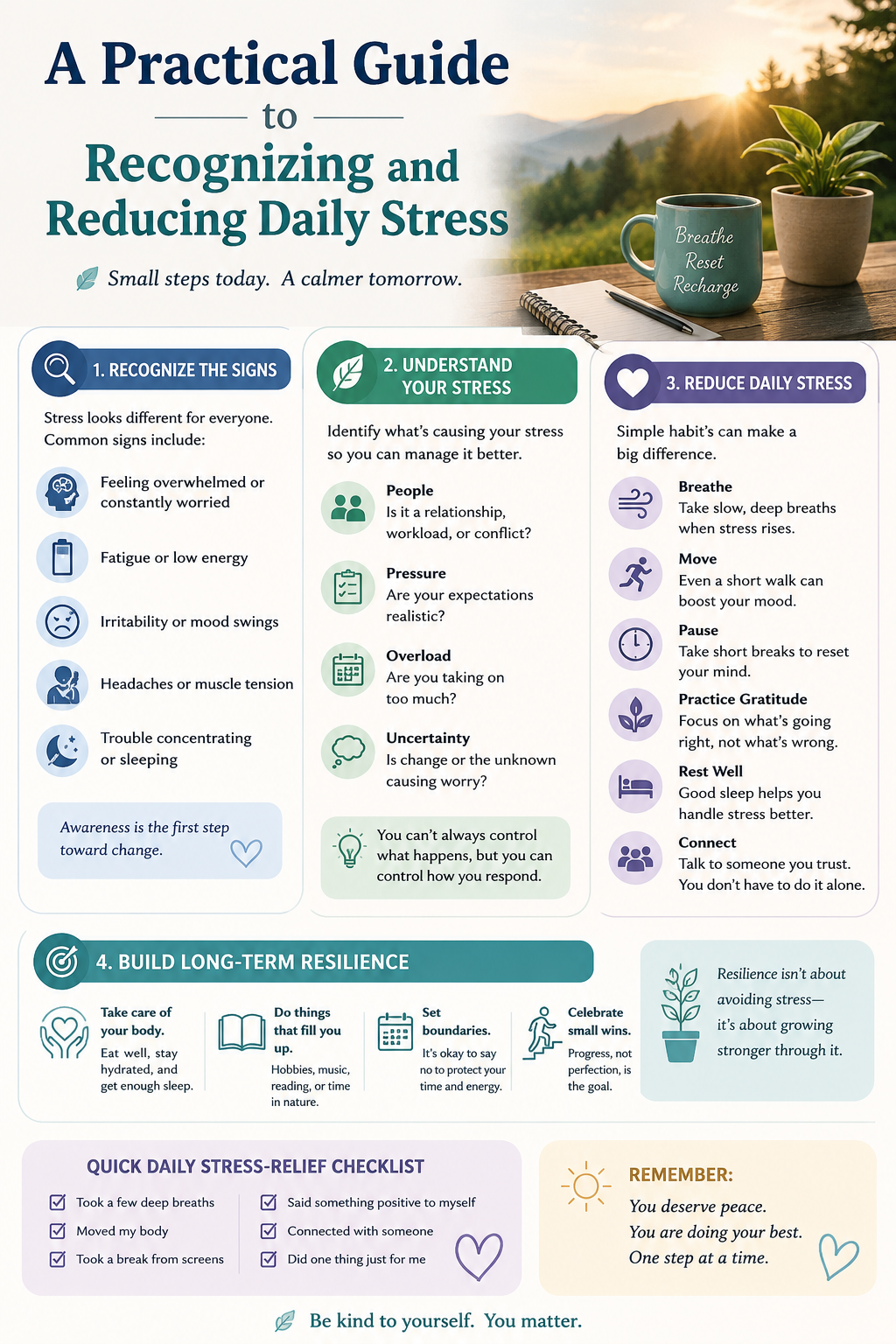
Everyday Stress Questions Autistic Adults Ask
Q: What are common signs I’m stressed if I don’t feel “anxious”? A: Stress can show up as irritability, shutdown-y fatigue, headaches, stomach upset, trouble sleeping, or feeling “snappy” over small things. You might also notice more stimming, more sensory sensitivity, or difficulty starting tasks. Try a daily 60-second check-in: energy level, sensory load, and how hard decisions feel.
Q: Why do I go from “fine” to overwhelmed so fast? A: A pile-up of small demands can push your nervous system past its limit all at once. An autistic meltdown is an involuntary response to overload, not a choice or a character flaw. When you notice early signs, reduce input first: dim lights, lower sound, pause conversations, and drink water.
Q: How do I know if I’m avoiding life or protecting my capacity? A: Protection restores you and makes tomorrow easier, while avoidance tends to shrink your world and increase dread. Use a simple test: “Will this choice help me recover or keep me stuck?” If it is protection, schedule a small re-entry step like a short errand at a quieter time.
Q: Can I manage stress if I struggle to name what I’m feeling? A: Yes. About 50% of autistic people also have alexithymia, so it can be easier to track body signals than emotion labels. Log concrete cues like jaw tension, heat, nausea, or mental fog, then match each cue to one calming action.
Q: What should I avoid when trying to calm down? A: Skip “push through it” advice, forced eye contact, and guilt-driven socializing when you are already overloaded. Be cautious with intense breathing drills, cold plunges, or high-caffeine “productivity fixes” if they spike panic or sensory discomfort. Choose low-risk, reversible options first, then build a routine that feels repeatable.
Explore Low-Risk Calming Modalities Beyond the Usual
Once you know what helps (and what tends to backfire), it can be useful to keep a few low-risk, optional tools in your back pocket.
Ashwagandha: a common herbal option some adults try for stress; start low and check for interactions.
Magnesium: often used for relaxation support; consider how it affects your digestion and sleep.
Essential oils: use as a scent cue (diffuser or diluted topical use), and avoid applying undiluted oils to skin.
THCa: adult-only; prioritize lab-tested products and learn how THCA carts are typically evaluated.
Use These 7 Same-Day Tools to Bring Stress Down Fast
Stress doesn’t always need a big lifestyle overhaul, sometimes you just need something you can do in the next two minutes. Pick one tool from this menu, try it once, and repeat it when you feel the volume turning up.
Do “slow breathing” for 3 minutes: Set a timer and breathe in gently through your nose for 4 seconds, out for 6 seconds. Keep it comfortable, this isn’t a lung workout. Studies on slow breathing techniques show they can shift your nervous system toward calmer “rest-and-digest” functioning, which is exactly what you want when your body is revving.
Try a 60-second sensory reset: Stress pulls you into your head; sensory input pulls you back into your body. Choose one: splash cool water on your face, hold a warm mug with both hands, smell something soothing, or step outside and feel the air for 10 breaths. If you liked any low-risk calming modalities from earlier, like gentle sound, scent, or mindful attention, this is the “micro” version you can use between meetings.
Use a tiny plan to stop mental spinning: Grab paper and make two columns: “Today” and “Not today.” Put only 1–3 items in “Today,” each written as the next physical action (example: “Email Jamie to reschedule,” not “Fix schedule”). Then pick one 5-minute starter step; finishing it creates momentum and reduces the vague, everywhere-at-once feeling.
Run a 90-second body scan to spot where you’re bracing: Scan forehead, jaw, shoulders, belly, hands, and feet. On each exhale, soften one area by 10%, not “relax completely,” just less clenched than before. This works well when stress shows up as irritability or tightness and you don’t have time for a full meditation.
Use a “name it + need it” script before you escalate: Try: “I’m feeling overwhelmed right now, and I need 10 minutes to reset so I don’t say this the wrong way.” Or: “I’m noticing I’m getting defensive, can we slow down and stick to one topic?” Clear stress communication scripts prevent the second wave of stress that comes from conflict fallout.
Set a boundary with a pre-written one-liner: Save two options in your notes app so you’re not improvising under pressure: “I can’t take this on today, can I get back to you tomorrow at 2?” and “I can help for 15 minutes, then I have to stop.” Boundaries are an immediate stress relief method because they reduce inputs, not just your reaction.
Create a “calm cue” you can repeat daily: Pick one consistent cue (starting your car, washing hands, opening your laptop) and pair it with one calming action (three slow breaths, shoulders down, unclench jaw). Research suggests breathing practices are universally accessible, scalable, and cost-free, which makes them perfect for building a repeatable pattern, today and over time.
Daily Habits That Build Lasting Calm
Quick tools help in the moment, but habits raise your baseline over time. Think of them as small votes for stress resilience, meaning your capacity to cope, recover, and keep going.
Same-Wake Sleep Anchor
What it is: Keep the same wake time, then dim lights and screens 60 minutes before bed.
How often: Daily
Why it helps: Steadier sleep protects mood and reduces stress sensitivity the next day.
Protein-Plus Breakfast
What it is: Eat protein with fiber within two hours of waking, like eggs and fruit.
How often: Most days
Why it helps: Balanced blood sugar reduces jitters, cravings, and afternoon irritability.
Ten-Minute Outdoor Walk
What it is: Take a brisk walk outside and notice three sounds, three sights, three sensations.
How often: Daily
Why it helps: Light movement drains stress chemistry and resets attention.
Calendar One Recovery Block
What it is: Schedule a protected 20-minute reset block labeled “recovery,” not “free time.”
How often: 3 times weekly
Why it helps: Predictable downtime interrupts chronic overload before it snowballs.
Build Lasting Calm by Practicing One Manageable Stress Skill
Everyday stress has a way of piling up fast, especially when routines slip and everything feels urgent at once. A steady approach, simple habits plus a stress management summary that starts with identifying personal stressors and choosing coping strategies, keeps the focus on what’s workable, not what’s perfect. Over time, starting manageable stress relief turns overwhelm into clearer signals and helps with building confidence in stress control. Calm comes from small choices repeated, not big fixes chased.
Follow my journey, support my advocacy, and learn more about my work by visiting adamfarris.net. Together, we can make a difference!