

How Parents Can Nurture Curiosity to Grow Self-Motivated Learners
How Parents Can Nurture Curiosity to Grow Self-Motivated Learners
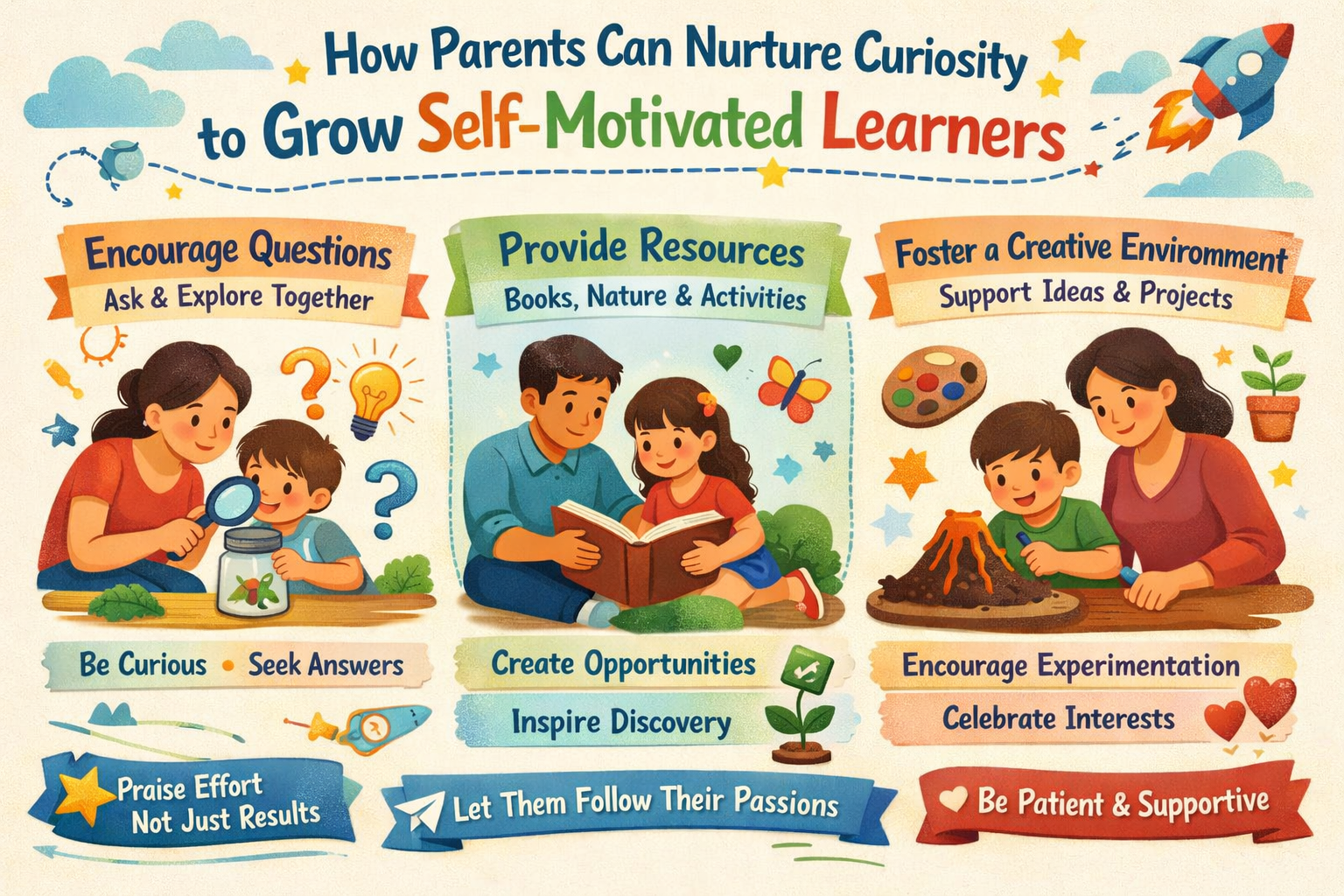
Parents of young children, especially families and supporters of kids with autism, often see bright sparks of curiosity fade under busy schedules, therapy goals, school expectations, and pressure to “perform” the right way. The challenge is that early childhood development depends on exploration, yet many kids learn quickly that questions, stimming, or deep interests are distractions instead of strengths. Supporting children’s curiosity doesn’t require perfection, but it does depend on steady parental engagement in education that makes room for wonder. When a child’s love of learning feels safe and valued, motivation has a chance to grow.
Understanding Why Curiosity Builds Motivation
Curiosity is the inner pull that makes a child want to figure something out. It acts as a catalyst for learning because questions and interests strengthen thinking skills and confidence. When kids feel safe to wonder, they practice choosing effort for their own reasons.
This matters for families and supporters focused on autism awareness and advocacy because self-motivation reduces the daily need to prompt, correct, or negotiate. It can also turn special interests, sensory-seeking, and nonstop questions into real learning momentum. Over time, persistence grows, even when a task feels hard.
Think of curiosity like a spotlight your child controls. A 2014 finding that participants remembered answers to questions that had stoked their curiosity helps explain why interest makes learning stick. When your child wants to know, their brain works longer and returns to the topic again. With the “why” clear, simple home setups can make exploration feel like the default.
Set Up a Home That Invites Exploration (7 Ideas)
A curiosity-friendly home doesn’t need to look like a classroom. It just needs small, reliable “yes spaces” where your child can safely touch, test, and tinker, because curiosity is what helps motivation grow from the inside out.
Create one “Yes Shelf” for independent exploring: Pick a low shelf or bin your child can access anytime, and stock it with 6–10 rotated items: a puzzle, stacking pieces, sensory items, a simple matching game, and a few open-ended materials. Keep it uncluttered so choosing feels easy, not overwhelming. When your child can start without asking (and without you setting it up), they practice initiative, an early form of self-motivation.
Choose educational toys and games that have more than one right answer: Aim for open-ended options that invite experimentation: building sets, sorting games, magnetic tiles, shape/texture matching, or simple board games with visual supports. If your child tends to repeat the same play, that’s okay. Add one gentle “variation card” (e.g., “Can you build it taller?” “Can we sort by color instead?”). Open-ended play matters because early development is rapid, with 90% of our brain growth happening before age five.
Set up a “mess-friendly” art spot with clear boundaries: Put a plastic tablecloth or tray on a small table, then store supplies in labeled containers: crayons, washable markers, glue stick, safety scissors, tape, and scrap paper. Offer a simple start prompt (“Draw your favorite animal,” “Make a sign for your room”) and one choice (“markers or crayons?”). Predictable boundaries reduce stress for many autistic kids, while the choices keep exploration and creativity alive.
Make hands-on learning part of everyday chores: Pick one routine task that can become a mini learning lab, cooking, laundry sorting, watering plants, or packing lunches. Give a job with a clear finish, like “pour to the line,” “match socks,” or “count 10 grapes,” then celebrate the attempt more than the result. Everyday tasks feel meaningful, which helps kids stick with learning even when it’s not instantly easy.
Use a “question parking lot” to honor curiosity without pressure: Keep a small notebook or whiteboard where anyone can write questions your child asks (“Why do leaves fall?” “How does the toaster work?”). Once or twice a week, pick one question and explore it together using a book, a short video, or a simple experiment. This teaches your child that their curiosity is valued and that exploring can happen in calm doses.
Build reading habits with tiny, reliable routines: Make shared reading so easy it’s hard to skip: one basket of books where your child already relaxes (couch, bed, or a beanbag), plus a goal like “two pages” or “one book jacket and stop.” Programs like Reach Out and Read highlight shared reading as a practical way adults support early literacy, and small routines help when energy is low. If reading aloud isn’t fun yet, try alternating pages, using audiobooks with a physical book, or letting your child “read” by describing pictures.
Connect interests to identity and advocacy in gentle ways: If your family enjoys handmade crafts or autism awareness items, add them to the learning environment: design a bracelet pattern, make sensory-friendly keychains, or create a poster that shares a proud message about neurodiversity. Interest-led projects give kids a reason to keep going, because the work feels personal and purposeful. It also gives you a natural way to practice turn-taking, communication, and planning.
With a few inviting spaces and predictable materials, your home becomes a place where curiosity starts easily, and simple routines can keep that motivation going even on hard days.
Daily Habits That Grow Curiosity and Motivation
Habits work because they remove guesswork. With simple routines, families and supporters can nurture curiosity in ways that feel steady, respectful, and doable, while weaving in autism advocacy and handmade awareness projects without pressure.
Notice and Name the Effort
What it is: Say what you saw, like “You kept trying different ways.”
How often: Daily.
Why it helps: Specific praise builds perseverance without turning learning into performance.
One Question, Then Wait
What it is: Ask one curious question, then count to ten silently.
How often: Daily.
Why it helps: Wait time supports processing and invites self-starting.
Two-Choice Challenge
What it is: Offer two options, like “sort by color or size?”
How often: Daily.
Why it helps: Choice boosts autonomy, which strengthens intrinsic drive.
Weekly Curiosity Checkout
What it is: Pick one saved question and explore it with a book or video.
How often: Weekly.
Why it helps: intrinsic reading motivation can connect to stronger reading growth.
Make-and-Share Advocacy Minute
What it is: Create one small awareness item, then write a one-sentence meaning.
How often: Weekly.
Why it helps: Purposeful making turns learning into identity and community care.
Pick one habit to start, then shape it to your child’s pace.
Questions Parents Ask About Curiosity and Overwhelm
When questions pop up, a few simple tweaks can keep curiosity steady.
Q: How can I encourage my child to keep exploring new interests without feeling overwhelmed?
A: Keep the “new” small and time-boxed, like a 10-minute trial, then pause and reflect. Watch for overload signals like irritability, avoiding the space, or perfectionism, and reduce choices to one or two options. Remember that children who are more curious can thrive academically, so protecting their energy matters.
Q: What are some simple ways to integrate curiosity-driven activities into our daily routine?
A: Use existing moments: ask one wondering question at breakfast, notice patterns on the walk to the car, or sort laundry by a child-chosen rule. Aim for “tiny and repeatable,” not elaborate projects. Keep a running “I wonder…” list on the fridge to lower decision fatigue.
Q: How do I recognize and support my child’s unique passions while balancing family responsibilities?
A: Look for what your child returns to when no one prompts them, and treat that as a clue. Support it with the smallest next step, like borrowing one book, watching one short clip, or making one advocacy-themed craft piece. Set a predictable boundary like “after dinner for 15 minutes,” so it fits family needs.
Q: What strategies can help me stay positive and motivated when my child’s curiosity seems to wane?
A: Assume it is a signal, not a failure: fatigue, stress, or too many demands can shut exploration down. Lower the bar to “show up and sample,” and praise effort, not outcomes. Tracking one weekly bright spot can help you notice progress even when it is quiet.
Q: I’m a nontraditional student balancing parenting and education. How can I build a support system to succeed in my learning journey?
A: Start by naming your constraints, then ask for targeted help: childcare swaps, study blocks, or a quiet hour protected on the calendar. Use simple structures like a weekly plan, an accountability buddy, and a checklist you can finish on hard days. If you need more structure, consider academic guidance for adult learners, which you do from the comfort of home.
Small supports, repeated kindly, add up to confident learners over time.
Turn Everyday Interests Into Curiosity That Builds Self-Motivation
When curiosity meets overwhelm, it can look like avoidance, shutdown, or “not interested,” even when a child is trying hard. The steady way forward is the mindset this guide has emphasized: notice real interests, offer gentle support, and use positive parenting messages that keep effort safe and meaningful. Over time, that kind of inspiring educational support helps families become lifelong learning champions who see more engagement, confidence, and encouraging continuous learning, because progress is recognized, not forced. Follow the interest, lighten the pressure, and celebrate the next small step. Pick one change this week, one question, one choice, or one moment of celebrating child achievements, and repeat it. These small wins build resilience and connection that lasts far beyond any single lesson.
About the Author
Adam Farris is an autism and disability advocate, inspirational speaker, and founder of Younique Abilities. Diagnosed with Tourette syndrome at age six and later with autism, Adam has dedicated his life to promoting understanding, inclusion, and the celebration of “unique abilities.” Through speaking engagements, advocacy work, and entrepreneurship, he encourages others to overcome the impossible and imagine the possibilities. Learn more at https://adamfarris.net/
